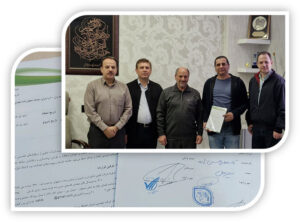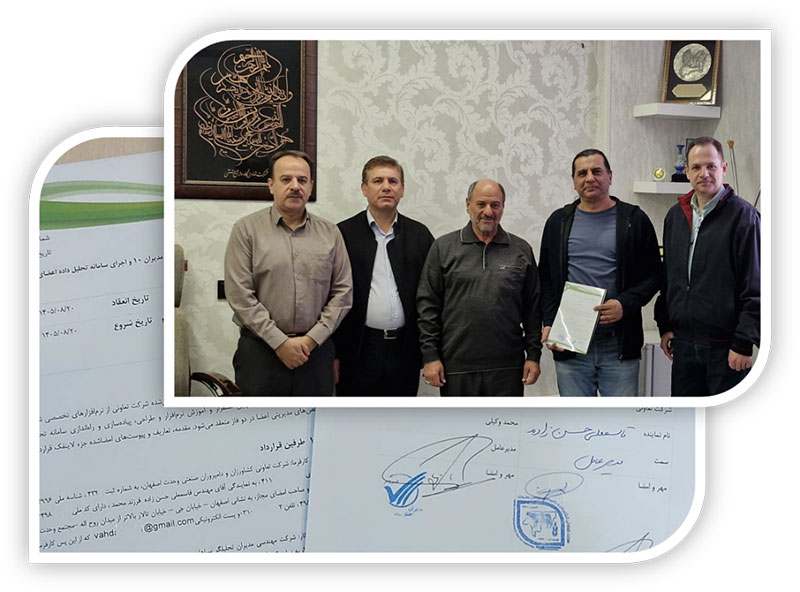
Modiran Tahlilgar Sepahan and Isfahan Vahdat Cooperative Sign Agreement for Integrated Livestock Data Analysis
Providing Modiran 10 software, training cooperative members, and establishing a data analysis server are the main areas of cooperation between the two organizations, aimed at strengthening herd management and supporting decision-making at the cooperative level.
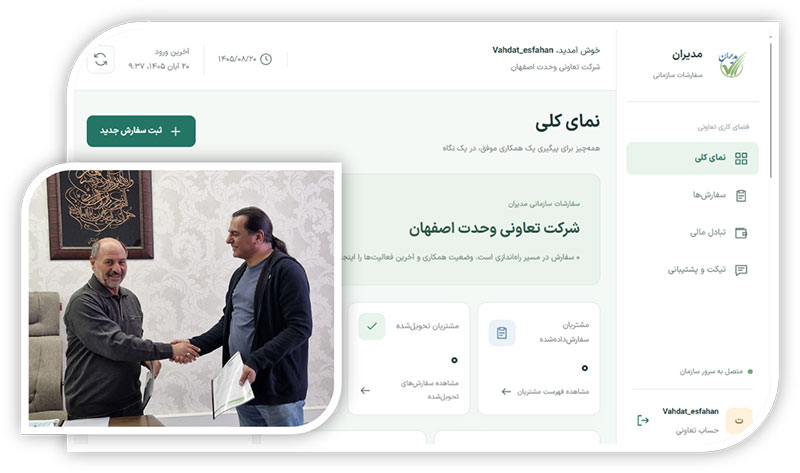
Modiran Tahlilgar Sepahan, a knowledge-based company, and Isfahan Vahdat Cooperative have signed an agreement to provide Modiran 10 Smart Livestock Management Software to the cooperative’s members and design and implement a data analysis infrastructure. This collaboration connects software deployment across livestock farms with a broader initiative to use data at two levels: individual farm management and cooperative-wide management.
Software Deployment and Establishment of an Analysis Infrastructure
Under the agreement, the software will be offered and sold to members through the cooperative. Modiran Tahlilgar Sepahan will be responsible for technical assessment, installation, commissioning, data migration, training, and support for members introduced through official cooperative referral letters. The agreement also provides for training sessions for members, with responsibilities shared between the two parties.
In the second phase, the contractor will be responsible for designing, implementing, testing, and commissioning the data analysis system, as well as providing periodic supply and maintenance services. The importance of this phase lies in creating a platform for systematic data review and transforming information into reports that can support planning and performance monitoring across member farms.
Accurate Data for Production and Cost Management
On a dairy farm, every record can help answer a management question, from changes in milk production and quality to reproductive performance, animal health status, and reasons for culling. For example, an increase in total milk production across a group of farms may simply result from a higher number of lactating cows. Reviewing per-cow production and lactation stage helps managers gain a more accurate understanding of changes in herd performance. Regular data recording and comparisons across different periods provide the basis for such assessments.
Economic assessment of livestock farming also requires considering revenue, costs, and production performance together. When consumption and cost data are recorded, it becomes possible to evaluate how changes in production, feed, services, or other expenses affect the farm’s financial results. The FAO guide to dairy farm management also identifies accurate recording of income and expenses as a fundamental basis for understanding a farm’s economic position and making decisions about its resources.
The features of Modiran 10 software include milk production recording and analysis, monitoring treatment and reproductive protocols, identifying data errors, and generating management reports and dashboards. For farm managers and specialists, these tools provide a traceable record of herd conditions and actions taken, making it easier to assess the outcomes of management decisions.
Modiran Tahlilgar Sepahan | Smart Livestock Farming
Agreement Between Modiran Tahlilgar Sepahan and Isfahan Vahdat Cooperative
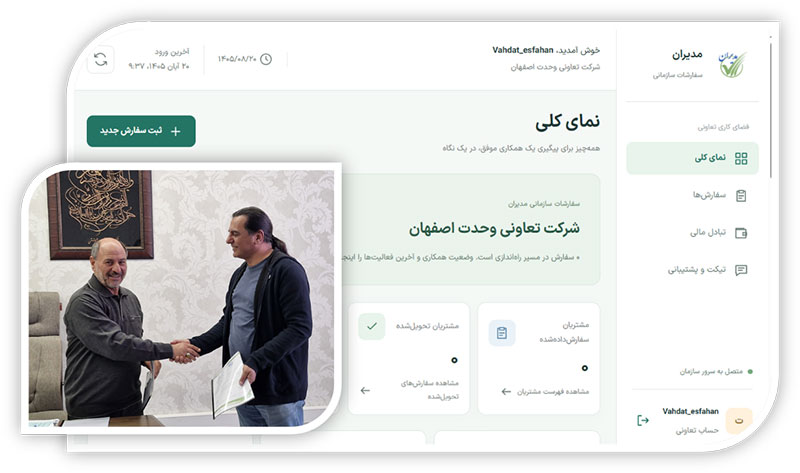
Analysis at the Cooperative Level and Identifying Shared Challenges Among Members
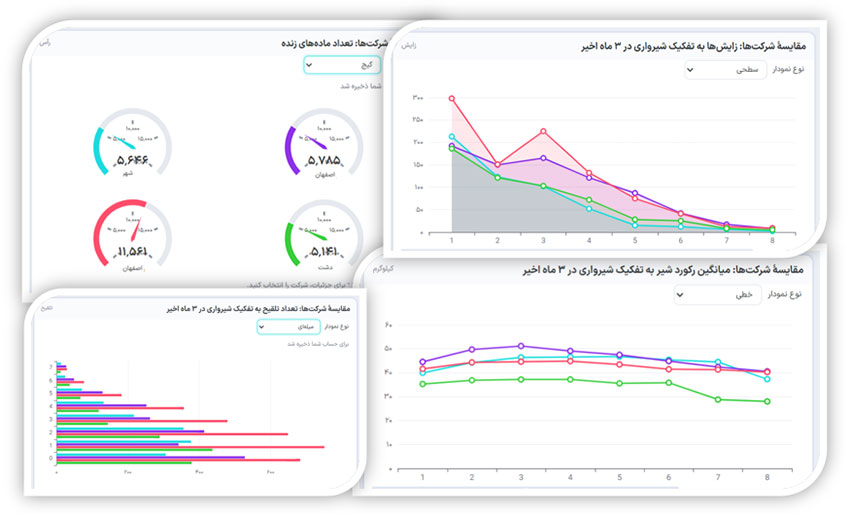
Data gains a new dimension when information from multiple dairy farms is analyzed collectively. While an individual farm manager monitors herd performance over time, the cooperative can analyze the indicators of participating members to identify common trends, differences in farm performance, and issues requiring expert attention. This perspective can help the cooperative make its technical and educational services more targeted.
For example, a simultaneous decline in production across several herds could serve as a starting point for investigating shared factors. By examining additional information on herd composition, feeding conditions, the farm environment, and recorded events, specialists can determine the appropriate direction for further investigation. Such information can also reveal which groups of members may need more specialized advice, training, or follow-up support.
Another application is learning from farms that achieve better results under similar conditions. Comparisons are meaningful only when indicators are defined consistently, calculation periods are aligned, and differences such as herd size, breed, lactation stage, and production conditions are taken into account. In this way, performance gaps can become a specific subject for discussion between managers and specialists and help establish realistic targets.
At the cooperative level, periodic analysis can also help prioritize training programs, allocate specialist services more effectively, and monitor changes in performance indicators after programs are implemented. Understanding production trends and the composition of participating herds, when sufficient data is available, can strengthen service planning and provide a more evidence-based foundation for representing members’ concerns in dealings with relevant organizations.
Connecting Cooperative Experience with Data Analysis Tools
Attention to data already has a history in the technical activities of Vahdat Cooperative. According to information released by the cooperative’s public relations department, its technical team has examined and compared the genetic performance of herds covered by DHI programs, inbreeding trends, and issues related to data recording and updating. This background provides a suitable foundation for expanding the systematic use of information in the cooperative’s services.
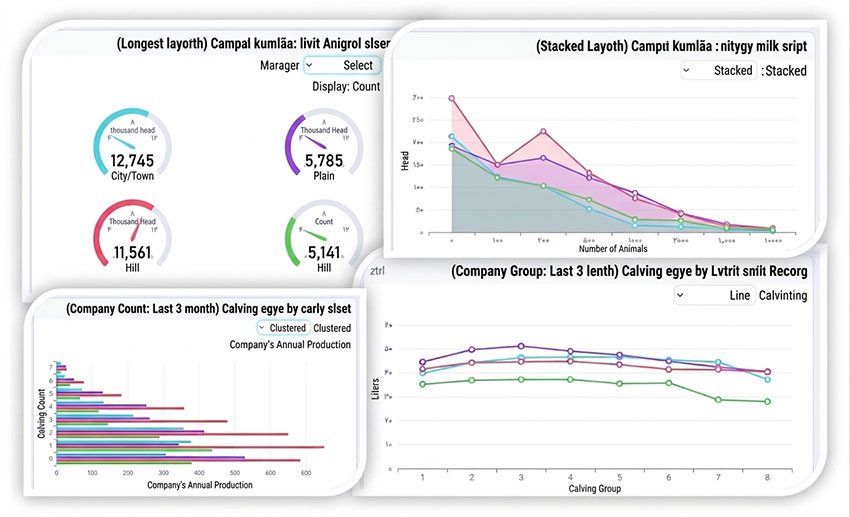
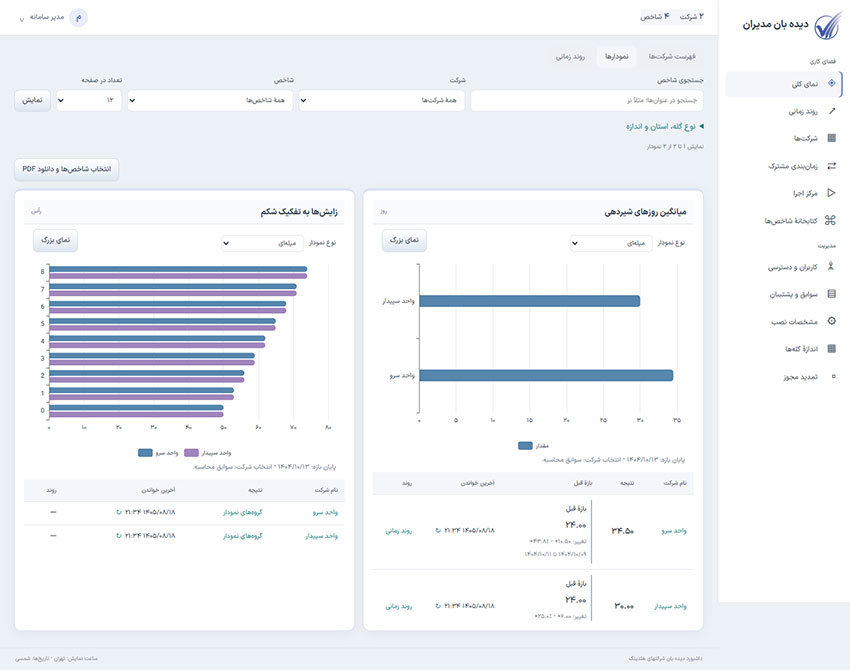
On the other side of this collaboration, Modiran has introduced Modiran Watch, explaining the use of a centralized dashboard for livestock cooperatives, unions, and holding companies. Displaying key performance indicators, comparing farms, and reviewing trends over time are among the capabilities presented for this solution. These capabilities highlight the importance of systematically using data collected from multiple organizations.
Training for Effective Use of Data
Training has a defined role in this collaboration. Accurate event recording, understanding the meaning of performance indicators, and the ability to interpret reports all shape the quality of system use. For example, familiarizing users with standardized methods for recording reproductive and treatment events helps make subsequent reports more reliable. Therefore, combining software deployment with training and support is an important part of putting data to practical use.
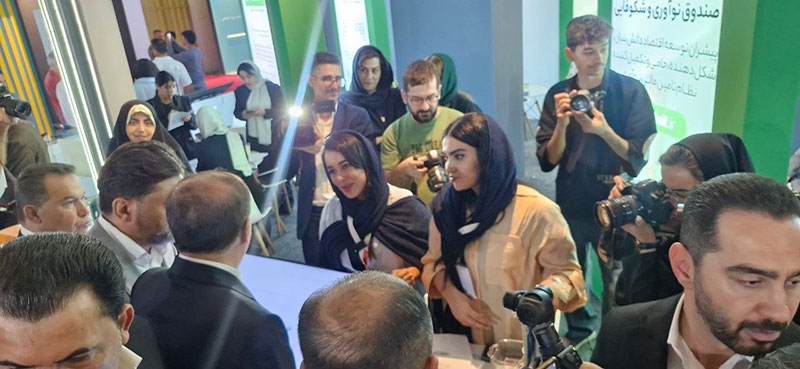
This educational relationship also has a documented history. According to a news report published on the Modiran 10 website, the third in-person training course for this software had previously been held at Isfahan Vahdat Cooperative, providing an opportunity for managers and specialists to gain practical familiarity with the software and exchange experience.
Modiran Tahlilgar Sepahan | Smart Livestock Farming
The agreement between Modiran Tahlilgar Sepahan and Isfahan Vahdat Cooperative creates an opportunity to connect software expertise with the practical experience of a livestock farming organization. Through systematic data recording, clearly defined indicators, and responsible use of members’ information, this collaboration can support more informed decisions on individual dairy farms and more coordinated planning at the cooperative level. Each report can thus provide managers with a specific issue to review, address, and monitor.
Agreement Between Modiran Tahlilgar Sepahan and Isfahan Vahdat Cooperative