Investment Guide to Kazakhstan for Agriculture and Livestock Businesses
Based on the field report by Mohammad Vakili, CEO of Modiran Tahlilgar Sepahan, from the Astana exhibition
Research and compilation date: October 30, 2026
Investment in Kazakhstan offers a range of opportunities for Iranian businesses operating in agriculture and livestock farming, from exporting software and specialized services to establishing production facilities. Observations by Modiran Tahlilgar Sepahan at the Astana exhibition indicate that data management, training, and improving livestock farm productivity are promising areas for commercial exploration, provided that customer needs, local support, and legally compliant revenue collection channels are clarified before expanding operations.
This guide focuses on agriculture, livestock farming, and related technologies. It is based on the company’s participation in KazAgroFarm 2026 and an examination of official Kazakhstani sources. The commercial recommendations presented here are analyses derived from this evidence and require project-specific feasibility studies before being used as a basis for investment decisions.
What You Will Find in This Guide
-
Lessons from the Astana exhibition for Iranian investors
-
Statistical overview of Kazakhstan’s livestock market
-
Investment opportunities and market entry models
-
Company registration, agricultural land, and taxation
-
Language, local support, and revenue collection
-
Investment costs and return assessment
-
Recommended 90-day roadmap
-
Frequently asked questions
What Did the Astana Exhibition Reveal About Investment Opportunities?
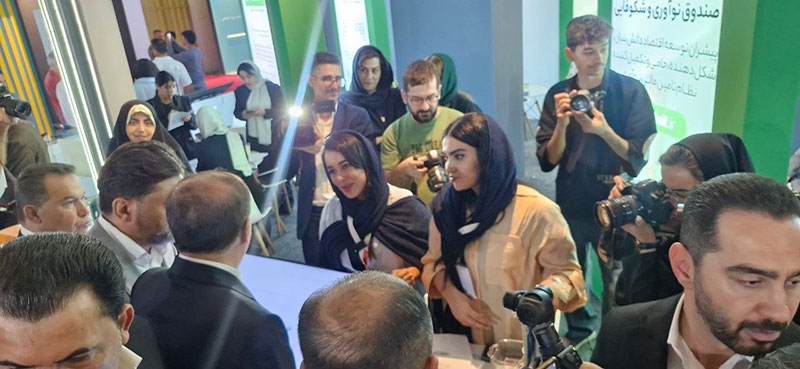
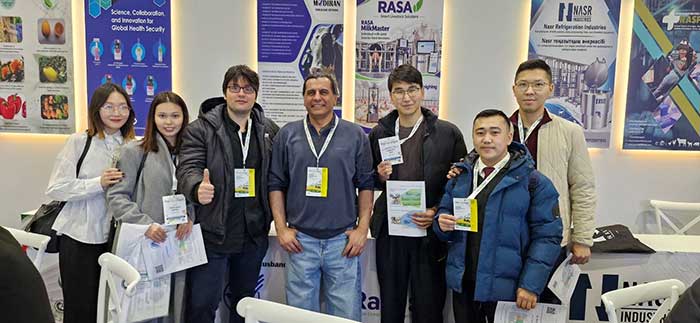
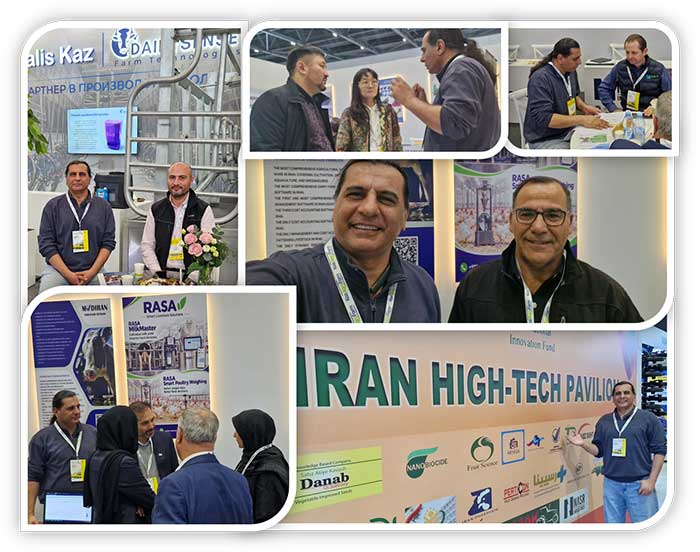
The Astana Agriculture and Livestock Exhibition was held from October 21 to 23, 2026. According to the final report published by Kazakhstan’s Ministry of Agriculture, more than 350 companies from 25 countries participated, while over 10,000 farmers and livestock producers visited the event. Digitalization and automation were also among the exhibition’s main themes. These figures make the event a valuable opportunity to understand potential customers and competitors.
Official report by Kazakhstan’s Ministry of Agriculture
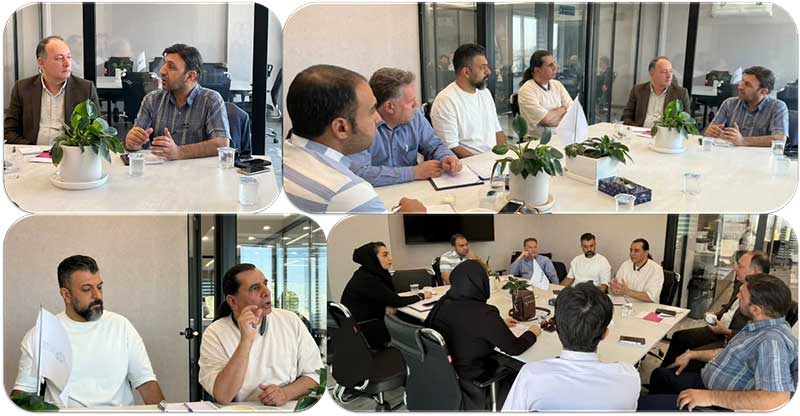
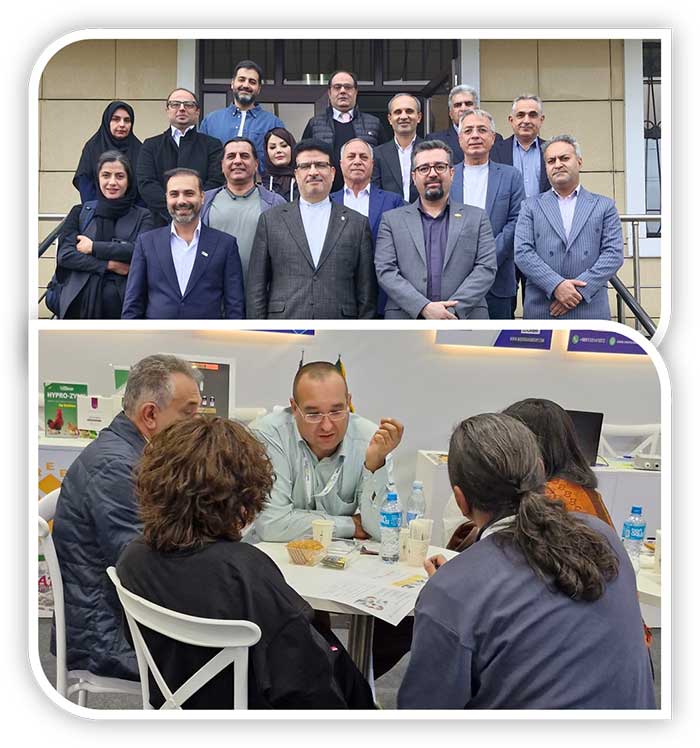
According to Mohammad Vakili’s travel report, Modiran’s participation included discussions with visitors, visits to relevant exhibition stands, a meeting at the Iranian Embassy, and exchanges with academic professionals. Three lessons from this experience are particularly important when developing a business strategy.
First, the language used to present a product influences the quality of negotiations.
In the interactions documented in the report, Russian played an important role in introducing technology and conducting specialized discussions. This observation supports prioritizing Russian-language product demonstrations and training materials. However, it does not mean that all customers or official documents can operate without Kazakh-language support.
Second, buyers value access to services and support.
The travel report emphasizes the importance of having a local point of contact. The commercial implication is that customers should know who will provide training after purchase, handle initial inquiries, and refer technical problems to the specialist team.
Third, training can be the starting point of a business relationship.
Extended discussions with professors and students, along with proposals for academic cooperation, indicate interest in potential collaboration. Invitations to deliver lectures and proposals for academic visits mentioned in the report remain proposals and should not be presented as signed agreements or confirmed programs.
The report also mentions discussions with a Turkish company regarding technological cooperation. This experience suggests exploring partnerships with existing market participants. However, visiting a limited number of exhibition stands is insufficient to rank technologies by country or estimate market share. Competitor analysis should continue through comparisons of products, prices, active customers, and service quality.
How Should You Evaluate Kazakhstan’s Livestock Market Using Data?
According to Kazakhstan’s National Bureau of Statistics, cow milk production increased by 2.1% during the first nine months of 2026 compared with the same period in the previous year. Average milk production per dairy cow increased by 1% across all producer categories and by 2.7% among agricultural enterprises.
These figures indicate production trends. However, they cannot independently establish demand for a particular software product or the profitability of a specific project.
Official livestock statistics for January–September 2026
The same source reports the distribution of cattle numbers as of October 1, 2026:
Share of Kazakhstan’s cattle population by producer category
| Statistical category | Share of total cattle |
|---|---|
| Households | ۴۴.۸% |
| Peasant or family farms and individual entrepreneurs | ۴۴.۶% |
| Agricultural enterprises | ۱۰.۶% |
These percentages represent shares of the total cattle population, not the number of livestock farms or the proportion of customers ready to purchase technology. The term “agricultural enterprise” is also a statistical classification and does not, by itself, indicate the size or industrial level of an operation.
To sell specialized solutions, businesses should develop a list of target customers and assess herd size, data-recording quality, purchasing budgets, existing equipment, and management decision-making authority. The choice of region or city should also be based on customer locations and service delivery costs. The limited observations made at the exhibition are not sufficient to identify definitive geographical market centers.
Investment Opportunities in Kazakhstan and Market Entry Models
For technology-based companies, a practical starting point could be a limited service with measurable results. Examples include standardizing herd information, preparing management reports, training employees, or connecting selected equipment to a management system.
The more precisely a customer’s problem is defined, the easier it becomes to evaluate costs and results.
For more information about this approach, read the article What Is Smart Livestock Farming? on Modiran’s website.
Comparison of potential market entry models
| Business model | Revenue source | Key requirement before launch |
|---|---|---|
| Herd management and data analysis software | Licensing, implementation, and support fees | Localization and demonstrating practical value using real customer data |
| Livestock training and consulting | Training courses and service contracts | Customer-specific content and qualified trainers or translators |
| Smart equipment sales and integration | Equipment sales, installation, and after-sales services | Checking permits, technical compatibility, spare parts, and maintenance |
| Cooperation with a distributor or local partner | Joint sales or contractual service revenue sharing | Partner verification and clear responsibilities, intellectual property, and settlement terms |
| Establishing a livestock farm or processing facility | Production and product sales | Feasibility assessment of land, water, feed, energy, permits, and sales markets |
For software and training services, the initial implementation can be limited, with investment allocated gradually. Production projects generally involve broader infrastructure and operational commitments from the beginning, making land-related legal assessments particularly important.
Cooperation with universities can also be considered as a way to train users and support personnel. Modiran’s documented experience in cooperation with Iranian universities provides a starting point for developing this model.
Implementing such cooperation in Kazakhstan requires clear agreements concerning content, responsibilities, costs, and software usage rights.
Legal Requirements for Investment in Kazakhstan
Company Registration and Choosing a Business Structure
A Limited Liability Partnership, known in English-language Kazakhstani sources as an LLP and in Russian as ТОО, is one of the business structures that investors can consider.
Kazakhstan’s e-government guide for foreign founders specifies identity or registration documents and their official translations.
The appropriate legal structure should be selected according to the type of service, partnership arrangements, contracts, and the founder’s circumstances.
Official guide to establishing a business by foreign nationals
Before registration, clarify four issues:
-
The founder’s entry and residence status.
-
Required documents and identification numbers.
-
Business licensing requirements.
-
Whether the company will be accepted by a bank.
If the founder intends to be physically present in Kazakhstan, the applicable visa or business-related permit requirements must be assessed separately. The government’s current guidance on the C5 Business Visa is one starting point for this assessment.
Company registration alone does not resolve all residence, employment, and banking requirements.
Agricultural Land Restrictions for Foreign Investors
According to the government’s explanation of Article 24 of the Land Code, foreign nationals, foreign legal entities, and Kazakhstani legal entities with foreign participation cannot own agricultural land or hold land-use rights over such property.
The entry of a foreign partner into a company holding such land may also trigger an obligation to transfer the relevant land rights.
Official explanation of restrictions on agricultural land transfers to foreigners
Therefore, registering a local company or purchasing shares in a livestock farm does not automatically resolve agricultural land restrictions.
Before purchasing assets or entering into a partnership, investors should examine the land classification, registered rights, and the consequences of changes in shareholder composition.
The ability to provide software or services to a farm should not be confused with the right to own or lease its land.
Taxes and Investment Incentives in 2026
In 2026, Kazakhstan’s standard Value Added Tax (VAT) rate is 16%, while the standard corporate income tax rate is 20%.
These two rates do not determine the final tax liability of every project. The type of activity, tax residency, place of service supply, and eligibility for exemptions are also important.
VAT rate | Standard corporate income tax rate in 2026
Selling technology to a livestock farm does not automatically qualify the seller for tax benefits available to agricultural producers.
The official KAZAKH INVEST portal also outlines specific frameworks and eligibility conditions for investment incentives.
Potential incentives should only be included in the initial financial model after eligibility has been established and the relevant approval has been obtained.
Investment agreement conditions at KAZAKH INVEST
Trade with Iran and the Eurasian Trade Agreement
According to the Eurasian Economic Commission, the Free Trade Agreement between Iran and the Eurasian Economic Union entered into force on May 15, 2025.
For equipment exports, businesses should examine product lists, customs tariff codes, and rules of origin.
This agreement should not be interpreted as automatically eliminating taxes on software services or resolving banking restrictions. Its provisions focus on trade in goods.
Official report on the agreement’s implementation | Iran–Eurasian Free Trade Agreement text
Three Operational Requirements for Successful Market Entry in Kazakhstan
A Product That Local Users Can Actually Operate
Software localization involves much more than translating menus.
Specialized livestock terminology, the Gregorian calendar, measurement units, data-entry formats, reports, and training materials must all be compatible with customers’ actual workflows.
Provide a trial version to a Russian-speaking user familiar with livestock farming and observe how they complete several routine tasks.
The travel report identifies Russian translation and calendar adaptation as potential export development requirements. These should be treated as localization plans and subjects for testing.
To learn more about the product’s advertised capabilities, visit the Features of Modiran’s Web-Based Software page.
Local Support with Clearly Defined Responsibilities
During a limited initial implementation, a trained local coordinator can handle initial inquiries, customer communication, and follow-up requests.
Whether this arrangement is sufficient depends on the number of customers and the complexity of the service.
Contracts should clearly specify the support language, availability hours, response times, need for on-site visits, and escalation procedures for technical problems.
For data-related services, also define data storage locations, access levels, backups, recovery procedures, and how data will be delivered at the end of the agreement.
Research use or transferring information outside the country should be carried out with customer consent and after reviewing relevant regulations.
A Transparent Revenue Collection and Transfer Process
One of the main challenges identified in the field report is the difficulty of transferring money.
Before submitting a final proposal, verify the contracting party’s identity and company ownership, the type of service, settlement currency, banks involved, and required documentation with the relevant bank and professional advisor.
A sale only becomes cash flow when the collection method is practical and compliant with applicable regulations.
Contracts should clarify transfer fees, payment dates, delays, refunds, and service suspension conditions.
A permitted trial payment at the beginning of the relationship may help reduce operational uncertainty.
Providing a free product should also have a clearly defined time limit and service scope. A free implementation alone does not demonstrate a customer’s ability to pay.
How to Estimate Investment Costs in Kazakhstan
The budget for software sales differs significantly from the budget required to establish a livestock farm.
Without defining the product, capacity, location, and legal structure, providing a single figure as the required investment would not be reliable.
For an initial business plan, divide expenses into three categories:
-
Startup costs: Market research, legal and tax consulting, translation, localization, required registration, travel, and initial setup.
-
Operating costs: Local personnel, technical support, hosting, accounting, marketing, training, and equipment maintenance.
-
Working capital: Funds required to cover expenses until receivables are collected, together with reserves for sales delays, exchange-rate changes, and unexpected costs.
For livestock farming or processing projects, building construction, equipment, livestock, feed, water, energy, veterinary services, transportation, and environmental compliance must also be estimated separately.
Supplier quotations should specify their dates, delivery conditions, and payment terms.
For a service business, the number of customers required to cover operating costs can be estimated by dividing annual fixed costs by the difference between annual collected revenue per customer and the variable cost of serving that customer.
This calculation does not account for the recovery of startup expenses or all tax and financing effects. These must be included in the project’s cash flow model.
Assess the financial model under at least three scenarios: conservative, base-case, and optimistic.
Key variables include active customer numbers, collection periods, exchange rates, and support costs.
To evaluate the value of a product for livestock farmers, select measurable indicators that can be compared before and after implementation, such as the completeness of herd records, reporting time, or the cost of a specific process.
When assessing changes in milk production or reproductive performance, factors such as herd composition, lactation stage, feed ration, and season must be controlled.
Differences between a few farms or short-term observations are not a sound basis for guaranteeing increased profitability.
Frequently Asked Questions About Investing in Kazakhstan
Which opportunities are most closely related to the Astana report for Iranian companies?
Herd information management, data analysis, training, and related technical services are the opportunities most closely connected to Modiran’s documented experience.
Choosing among them should involve customer interviews and pilot projects. Exhibition observations alone are insufficient to identify one option as the best investment.
Can registering a company make it possible to buy or lease agricultural land?
Company registration does not remove restrictions on agricultural land ownership and use by foreign nationals and companies with foreign participation.
Land rights and the consequences of admitting a foreign partner should be reviewed under current regulations before making any financial commitment.
Is a Russian-language version sufficient to enter the market?
The reported experience identifies Russian as an important language for negotiations and product presentations.
Whether it is sufficient for every customer, training program, contract, or official document must be assessed separately. Testing the product with local users is part of this evaluation.
Is a full office and team required from the beginning?
The need for an office and the number of employees depend on the business model, service commitments, and legal requirements.
For a limited service implementation, a smaller structure may be evaluated. Expansion should correspond to workload and service quality requirements.
Can investment returns be guaranteed?
There is no uniform or guaranteed rate of return for this market.
Return estimates should be based on actual contracts, service costs, taxes, exchange rates, and revenue collection periods.
The decision should depend on the feasibility study and pilot results for the specific project.
Next Steps for Cooperation in Livestock Technology
The Astana experience provides a basis for exploring the export of livestock farming expertise and services.
Turning this opportunity into a sustainable business depends on customer understanding, a usable product, responsive support, and an executable contract.
For technology companies, a limited project with documented results can provide the foundation for deciding whether to expand investment.
If you operate in herd management, training, or livestock technology and would like to discuss technical cooperation with Modiran, visit the Modiran Tahlilgar Sepahan Cooperation Request page.
Providing information about your business activities, the problem you want to address, and your target market will help make the proposal assessment more precise.
Fieldwork basis: The report entitled “Participation of Modiran Tahlilgar Sepahan in the 2026 Kazakhstan Agriculture and Livestock Exhibition,” prepared by Mohammad Vakili on October 30, 2026. Statistical data and regulatory explanations from the official sources linked in this article were added, with October 30, 2026, as the research date. This article is an initial opportunity assessment guide; any financial commitment requires project-specific legal, tax, and commercial due diligence.