What is smart animal husbandry? The role of technology, the Internet of Things, and human resources in increasing animal husbandry productivity
Story One: Smart Livestock Farming; A Major Step Toward Increasing Productivity in the Livestock Industry
In today’s world, technology has created a fundamental transformation not only in advanced industries but also in agriculture and livestock farming. One important branch of this transformation is Smart Livestock Farming—a modern approach that leverages advanced technologies to increase productivity in livestock units while reducing costs.
The Concept of Smart Livestock Farming
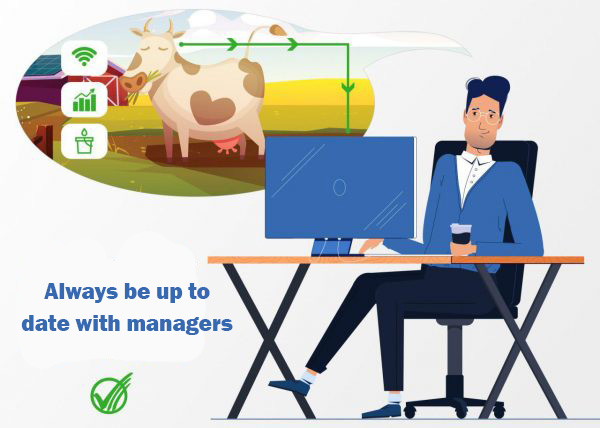
Smart livestock farming refers to a set of technological methods and tools aimed at data-driven decision-making. These systems utilize tools such as:
- Wearable sensors
- Smart cameras
- Management software
- Automated systems
to continuously monitor and manage livestock operations.
Increasing Productivity Through Technology
These technologies allow farmers to make decisions based on real data rather than relying solely on personal experience. The outcomes of this approach include:
- Reduced losses caused by diseases
- Increased milk and meat production rates
- Lower feed and water consumption
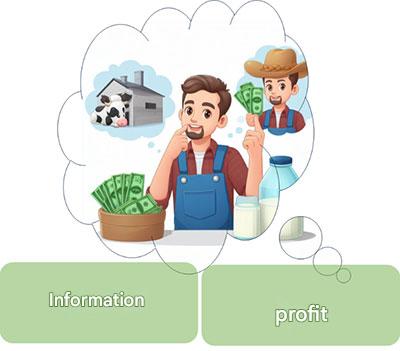
- Ultimately, higher profitability for livestock operations
Transition from Traditional to Data-Driven Management
Traditional livestock management is based on observation and experience. In smart livestock farming, however, data replaces guesswork. Each animal has a “digital profile” in which all relevant information is recorded and stored. These data form the foundation for accurate and effective managerial decisions.
Conclusion
Smart livestock farming means using data science and technology to enhance productivity and sustainability. This path is shaping the future of the livestock industry—a future in which data becomes the guiding light for decision-making.

Story Two: The Role of the Internet of Things and Big Data in Modern Livestock Management
Over the past decade, two technologies—the Internet of Things (IoT) and Big Data—have played vital roles across various industries. In livestock farming, these technologies have become key tools for smart herd management and increased productivity.
Internet of Things in Livestock Farming
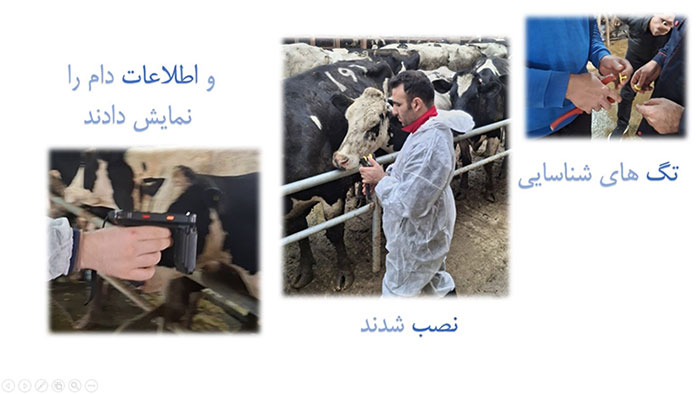
The Internet of Things refers to connecting devices and objects to a network so they can automatically send and receive data. In livestock farming, sensors and chips attached to animals collect information such as:
- Body temperature
- Activity level
- Signs of calving
- Feed and water consumption
and transmit this data to management software.
Applications
- Animal health monitoring: Early alerts in case of illness or reduced feeding
- Nutrition management: Automatic feed control based on age and weight
- Environmental control: Monitoring temperature, humidity, and ventilation to prevent heat stress
Big Data: The Brain of Smart Decision-Making
The data collected by IoT systems is massive in volume. Analyzing this data using Big Data tools helps farmers discover hidden patterns and relationships.
Examples include:
- Identifying optimal times for insemination or calving
- Early disease detection before visible symptoms appear
- Predicting milk production or weight gain
- Analyzing the performance of different breeds
Conclusion
The combination of IoT and Big Data has transformed livestock management from an experience-based approach into a scientific, data-driven, and predictive system. These technologies are the pillars of modern livestock farming and essential tools for improving productivity in industrial-scale operations.
Story Three: Human Resources in the Era of Smart Livestock Farming
In the era of digital transformation, livestock farming is no longer limited to nutrition science and breeding. Today, data management, smart technology, and information analysis have become integral parts of the livestock industry. However, smart livestock farming cannot succeed without skilled and well-trained human resources.
Smart equipment, sensors, and herd management software are only effective when human operators can correctly interpret data, make scientific decisions, and properly utilize these systems.
The Role of Human Resources in Smart Livestock Farming
Smart livestock farming requires a multidisciplinary team. In the past, most responsibilities fell on farmers and farm workers. Today, human resources must combine traditional livestock skills with digital and technological expertise.
Key roles include:
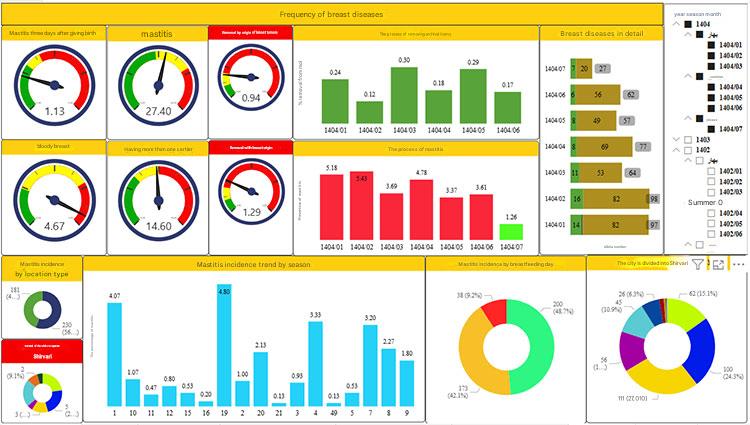
- Smart livestock system operator: Working with software, entering data, monitoring animal status via dashboards, and generating reports
- Livestock data analyst: Analyzing production, feed, and health data to provide improvement recommendations
- Smart equipment maintenance technician: Maintaining and repairing sensors, cameras, and automated systems
- Farm data and technology manager: Overseeing data collection, storage, and security
Essential Skills for Human Resources in Digital Livestock Farming
Modern livestock professionals must possess skills beyond traditional experience, including:
- Data literacy:
The ability to read, interpret, and analyze data for daily decision-making. - Herd management software proficiency:
Using software to record calving, feeding, milk production, diseases, and vaccinations. - Understanding IoT concepts:
Familiarity with smart sensors, RFID chips, and their integration into management systems. - Big Data analysis:
Basic knowledge of analyzing large datasets and using AI-based reports for precise decision-making. - Technological mindset and continuous learning:
Smart livestock farming evolves rapidly, making ongoing education and skill updates essential.
Human Resource Services in Smart Livestock Farming
In smart livestock farming, human resources are not merely labor—they are part of the value chain and decision-making process. Modern livestock service companies often provide specialized HR services, including:
- Specialized training programs for farmers, technicians, and managers
- Deployment of skilled personnel to industrial livestock units for tasks such as milk data analysis and sensor-based health monitoring
- HR and organizational structure consulting to define new digital roles
- Data-based performance evaluation using measurable indicators such as feed efficiency and growth rates
The Importance of Continuous Training
Smart livestock farming combines animal science, information technology, and data analysis. Traditional education alone is insufficient. Establishing skill-based training centers, online workshops, and data-driven programs at agricultural universities can reduce existing skill gaps.
Human Resource Challenges in Smart Transformation
Despite its benefits, smart livestock farming faces challenges such as:
- Shortage of trained personnel in rural areas
- Resistance to new technologies
- Need for stable internet infrastructure
- Costs of training and system maintenance
However, experiences from countries such as the Netherlands, Denmark, and New Zealand show that investing in human resource training is the most critical factor for successful smart livestock transformation.
The Future of Human Resources in Smart Livestock Farming
In the near future, new roles will emerge, including:
- Livestock data analysts
- Smart livestock system operators
- IoT specialists for farms
- Livestock data security experts
- Digital livestock training instructors
These roles will create new opportunities for young professionals interested in both technology and agriculture and will support the sustainable growth of the industry.
Final Summary
Smart livestock farming is impossible without trained human resources. Just as data and sensors are the heart of technology, human expertise is its brain and driving force.
The future of the livestock industry belongs to those who understand technology, use data effectively, and continuously adapt to digital transformation.